

2026-06-01 Posted by TideChem view:323
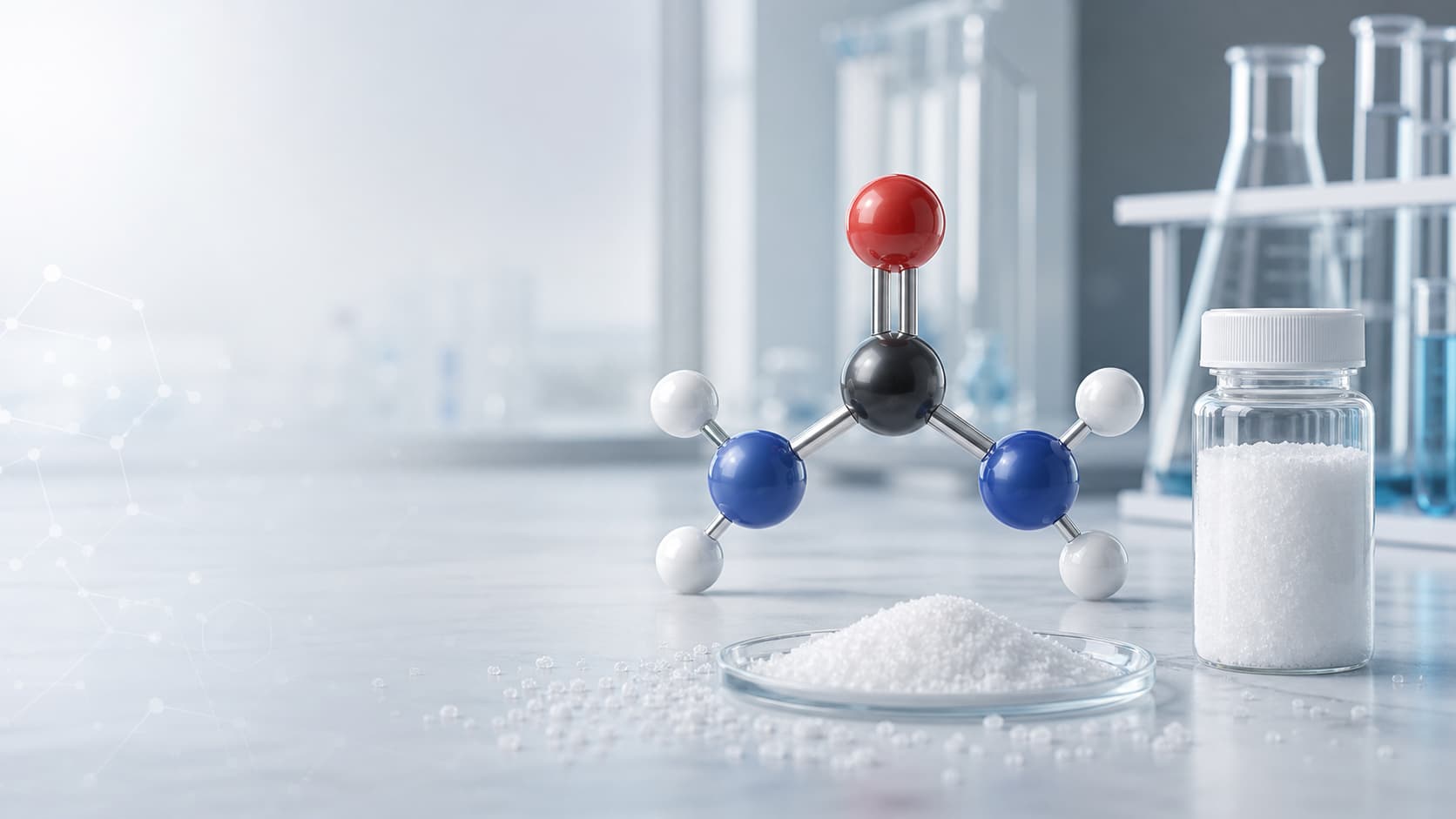
Urea is a small organic compound with the chemical formula CH₄N₂O. It is also known as carbamide and has the CAS number 57-13-6. Structurally, urea contains one carbonyl group bonded to two amino groups, making it a simple but highly important nitrogen-containing molecule.
Although urea is widely recognized as a fertilizer component, its importance goes far beyond agriculture. In biology, urea is the main end product of nitrogen metabolism in humans and many animals. In pharmaceutical and medical fields, it is used in dermatological formulations, laboratory research, diagnostic testing and formulation development. Its strong hydrogen-bonding ability, high water solubility and low molecular weight make it a useful compound in both applied science and industrial production.
Urea is typically found as a white crystalline solid. It is highly soluble in water because it forms extensive hydrogen bonds with water molecules. This property is central to many of its biological, pharmaceutical and formulation uses.
Key chemical information:
| Property | Description |
| Chemical name | Urea |
| Common synonym | Carbamide |
| Molecular formula | CH₄N₂O |
| CAS number | 57-13-6 |
| Molecular weight | About 60.06 g/mol |
| Appearance | White crystalline solid |
| Solubility | Highly soluble in water |
| Functional group | Carbonyl bonded to two amino groups |
From a chemistry perspective, urea is stable under normal storage conditions, but it can decompose under strong heat or harsh reaction environments. It can also participate in hydrogen bonding and complex formation, which is why it is frequently used in biochemical and pharmaceutical research.
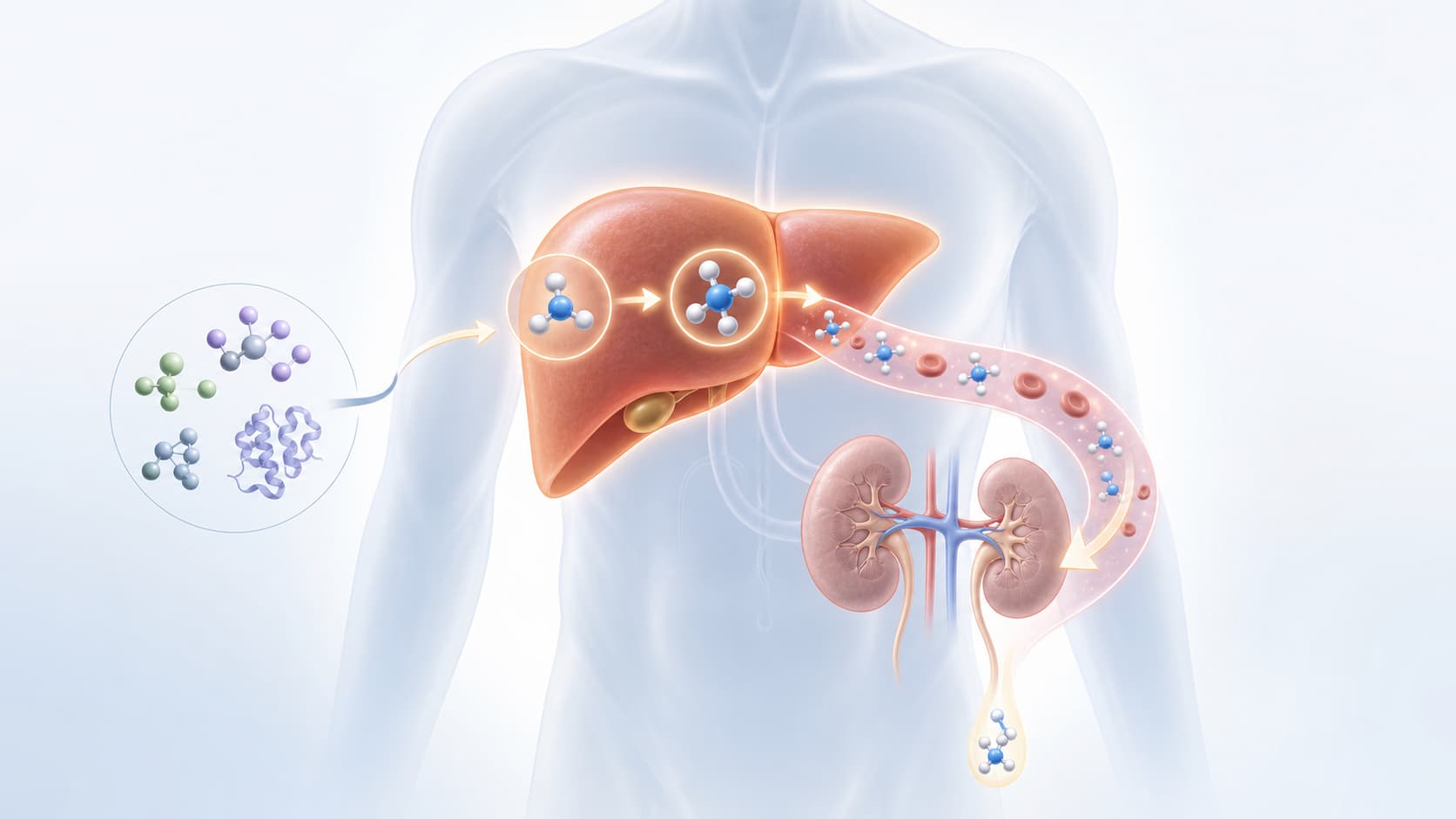
In the human body, urea is produced mainly in the liver through the urea cycle. This pathway converts toxic ammonia, which is generated during amino acid and protein metabolism, into urea. Urea then enters the bloodstream and is excreted by the kidneys in urine.
This process is essential because ammonia is harmful to cells, especially the nervous system. By converting ammonia into urea, the body creates a safer, water-soluble waste product that can be removed efficiently.
In clinical practice, blood urea nitrogen, often called BUN, is commonly measured to help evaluate kidney function, protein metabolism and certain liver-related conditions. However, BUN values should always be interpreted in clinical context, because diet, hydration status, liver function and renal function can all influence results.
Urea has a practical role in pharmaceutical development because it combines biological relevance with useful physicochemical behavior. It is simple, water-soluble, compatible with many formulation systems and well studied.
In pharmaceutical and biomedical contexts, urea is commonly associated with:
For formulation scientists, urea is especially interesting because its effect changes with concentration. At lower concentrations, it can help retain moisture in the skin. At higher concentrations, it can soften thickened keratinized tissue, which explains its use in products for dry, rough or hyperkeratotic skin.
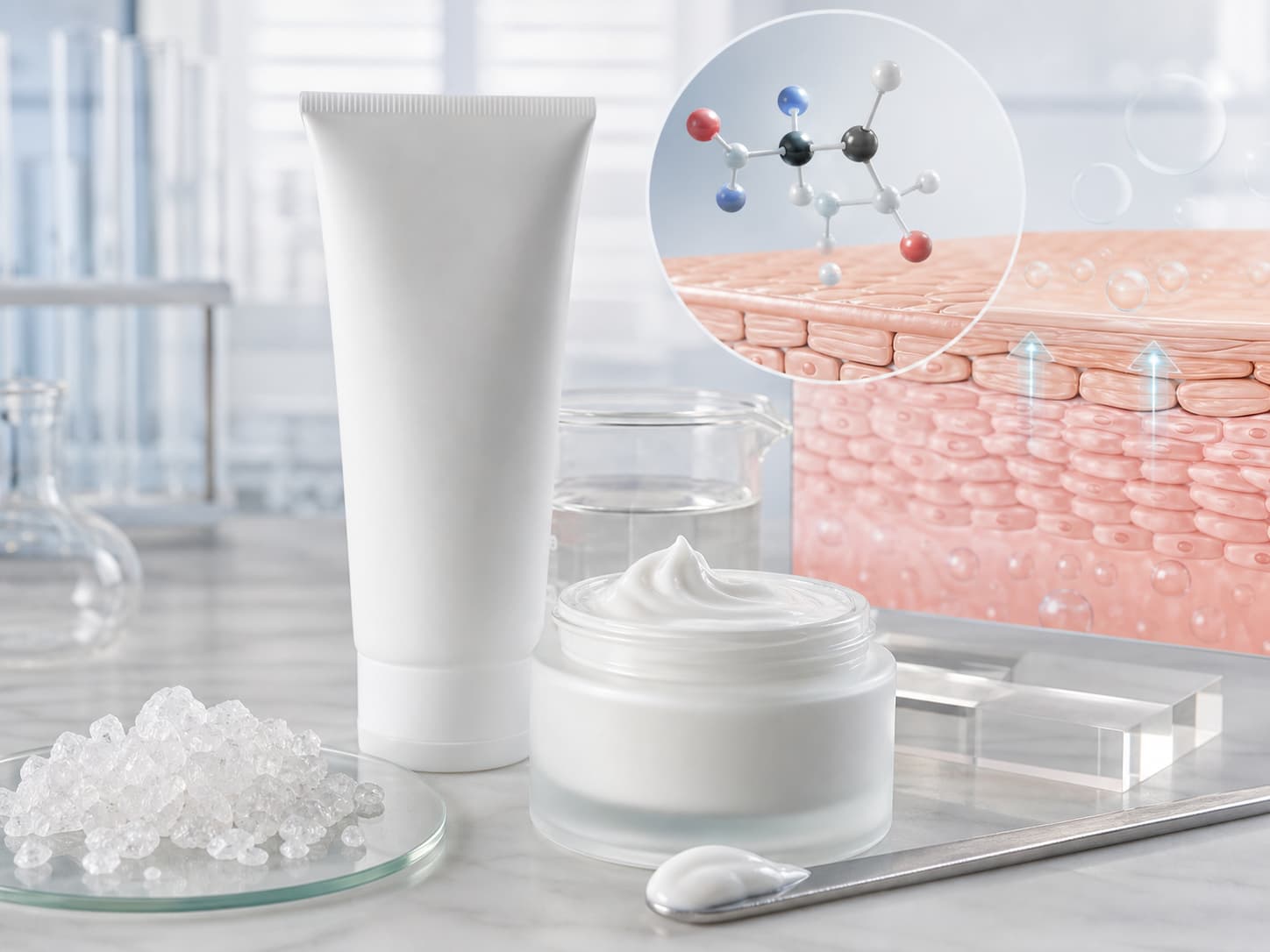
Urea is widely used in topical products because it acts as both a humectant and a keratolytic agent, depending on concentration.

At lower concentrations, urea helps attract and retain water, improving skin hydration. At higher concentrations, it can help loosen and soften thickened outer skin layers. This makes it useful in formulations designed for dry skin, calluses, rough skin, ichthyosis, psoriasis-associated scaling and nail-softening applications.
For pharmaceutical teams, concentration selection is important. A mild moisturizing product and a high-strength keratolytic preparation are not equivalent, even if both contain urea. The final performance depends on concentration, vehicle, pH, excipient system, skin condition and application area.
In laboratories, urea is valued as a protein denaturant. At high concentrations, it can disrupt hydrogen bonding and weaken the interactions that help maintain protein structure. This makes it useful in protein chemistry, molecular biology, proteomics and analytical biochemistry.
Common research uses include:
Because urea can influence protein structure, researchers must control its concentration carefully. Even small differences in experimental conditions can affect protein behavior, assay reproducibility and downstream analytical results.
Modern urea is produced industrially from ammonia and carbon dioxide. The process is efficient and large-scale, which explains why urea is widely available in agricultural, industrial, cosmetic and pharmaceutical grades.
For pharmaceutical use, quality requirements are far stricter than for agricultural or industrial applications. Important quality considerations may include:
Pharmaceutical manufacturers should select urea grade based on intended use. Material for topical formulations, laboratory research or regulated drug products should be sourced with appropriate documentation, such as certificate of analysis, specification sheet and regulatory support documents.
Urea is often confused with uric acid, but they are different molecules with different biological roles.
Urea is the major nitrogen waste product produced from ammonia metabolism in humans. It is highly water-soluble and excreted mainly through urine.
Uric acid is the end product of purine metabolism. Elevated uric acid is associated with conditions such as gout and certain kidney-related issues.
For scientific writing, product documentation and clinical communication, this distinction matters. Using the terms interchangeably can create confusion, especially in medical, pharmaceutical or diagnostic contexts.
Urea is generally considered a low-hazard compound under standard laboratory and industrial handling conditions. However, good handling practice is still necessary. Dust formation should be minimized, and users should avoid unnecessary inhalation, eye contact or prolonged skin exposure to concentrated material.
In pharmaceutical and cosmetic products, safety depends on concentration, formulation design, intended population and route of application. High-strength topical urea products may cause stinging, irritation or burning, especially on damaged or sensitive skin. Product developers should evaluate tolerability through appropriate testing and follow relevant regulatory requirements.
Urea is a simple molecule with broad scientific and pharmaceutical value. It is central to nitrogen metabolism, useful in clinical diagnostics, important in dermatological formulations and widely applied in biochemical research. Its high water solubility, hydrogen-bonding capacity and concentration-dependent effects make it a versatile compound for researchers and pharmaceutical professionals.
For the pharmaceutical industry, the key is not only understanding what urea is, but also selecting the right grade, concentration and formulation system for the intended application. When used properly, urea remains one of the most practical and well-understood compounds across biology, medicine and applied chemistry.
Urea is an organic compound with the formula CH₄N₂O. It is produced naturally in the body as the main end product of nitrogen metabolism and is also manufactured industrially for pharmaceutical, agricultural and research uses.
Yes. Carbamide is another name for urea. Both terms refer to the same compound.
Urea is commonly used in topical dermatological formulations, especially products designed for dry, rough or thickened skin. It is also used in research, diagnostics and formulation development.
Urea is produced in the liver through the urea cycle, which converts toxic ammonia into a safer, water-soluble compound that can be excreted by the kidneys.
Urea is generally well tolerated when used appropriately. Safety depends on concentration, route of exposure, formulation type and intended use. High-concentration topical products may cause irritation in some users.
References: PubChem: Urea Compound Summary; NCBI Bookshelf: Physiology, Urea Cycle; WHO Model List reference surfaced in search results for dermatological use of urea.