
2026-06-05 Posted by TideChem view:265
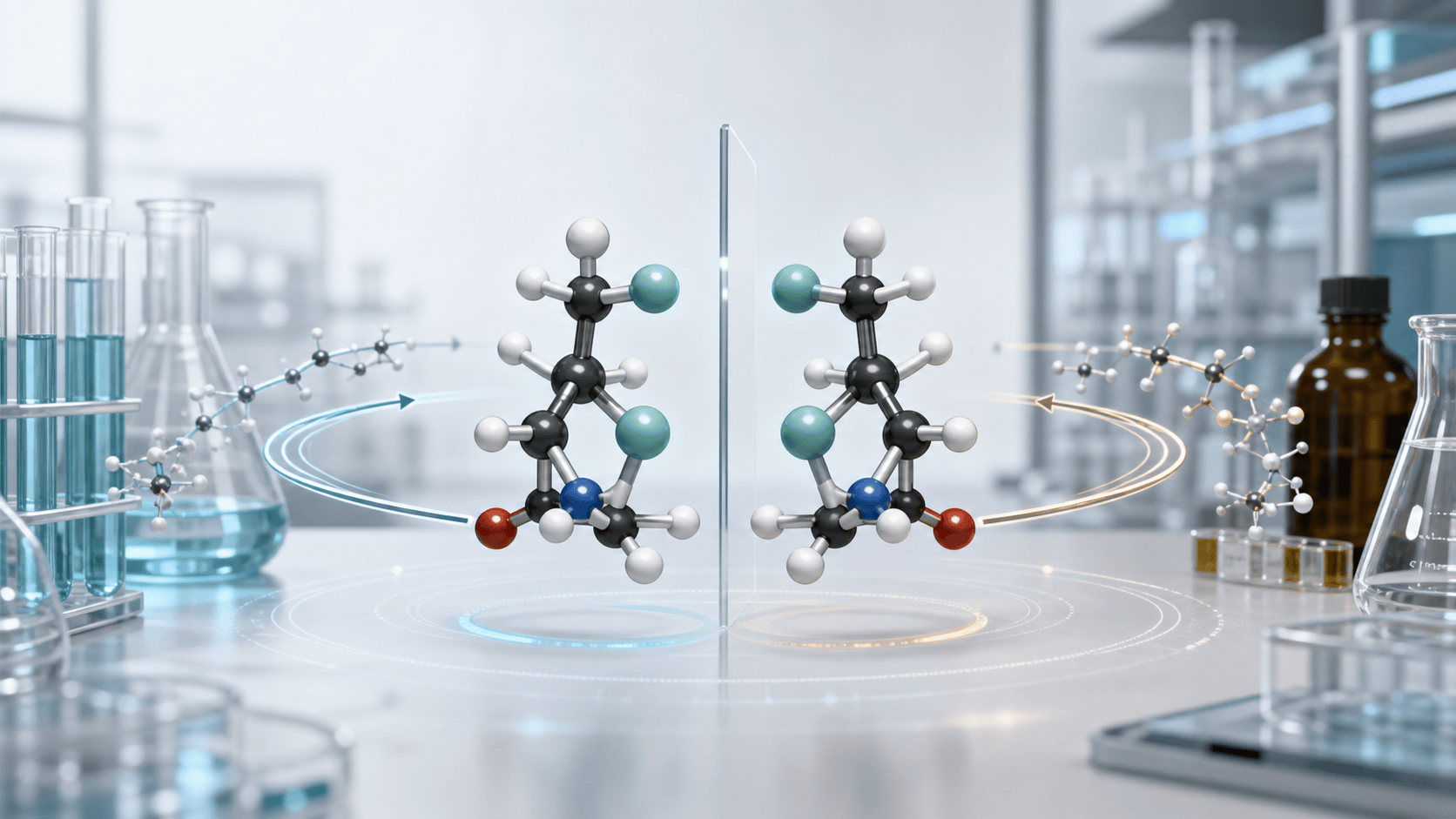
Chiral synthesis is the design and execution of chemical reactions that produce a desired three-dimensional form of a molecule. In pharmaceutical research, this is more than a structural detail. Two molecules may have the same atoms and bonds, yet behave differently in the body because their spatial arrangement is different.
These mirror-image forms are called enantiomers. They are often compared to left and right hands: similar in shape, but not perfectly superimposable. In a biological system, where enzymes, receptors and transporters are themselves chiral, one enantiomer may bind strongly while the other binds weakly, differently or sometimes undesirably.
For medicinal chemists, process chemists and quality teams, chiral synthesis is therefore a central part of modern drug development. It affects route design, impurity control, pharmacology, toxicology, regulatory strategy and manufacturing cost.
Chiral synthesis refers to methods used to prepare molecules with controlled stereochemistry. The goal is usually to obtain one enantiomer or diastereomer preferentially, rather than a random mixture.
A molecule is chiral when it cannot be superimposed on its mirror image. Chirality often arises from a carbon atom bonded to four different substituents, although other stereogenic elements can also create chirality, including axial, planar or helical chirality.
In practical pharmaceutical chemistry, chiral synthesis commonly aims to achieve:
The best chiral synthesis is not simply the one with the highest selectivity in a small flask. It must also be robust, scalable, analytically controllable and compatible with the target product’s regulatory requirements.
Many drug targets are chiral environments. Enzymes, receptors, ion channels, nucleic acids and proteins all have defined three-dimensional shapes. Because of this, the body can often distinguish between two enantiomers of the same compound.
One enantiomer may provide the desired therapeutic activity. The other may be less active, inactive, metabolized differently or associated with unwanted effects. This does not mean every racemate is unacceptable. Some racemic drugs are clinically useful. But it does mean the stereochemical composition of a chiral drug substance must be understood and controlled.
For drug developers, chirality can influence:
FDA guidance on stereoisomeric drugs emphasizes that the stereoisomeric composition of a drug with a chiral center should be known, and that appropriate stereochemical identity tests or selective assays are often needed during development and control.
There is no single best method for making chiral molecules. The right strategy depends on the target structure, development stage, cost, timeline, available starting materials and scale.
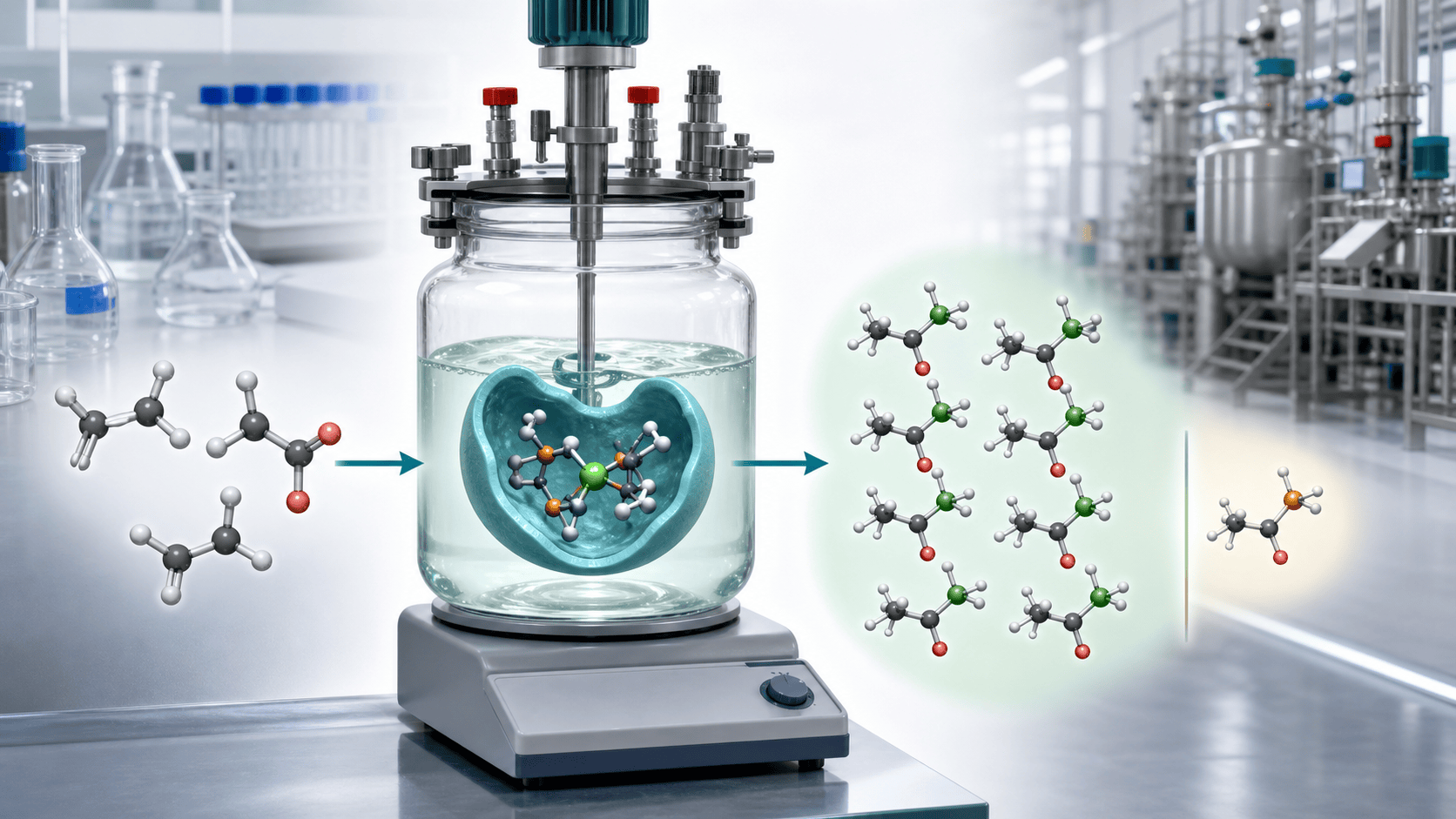
Asymmetric catalysis uses a chiral catalyst, ligand or organocatalyst to guide a reaction toward one stereochemical outcome. This approach is powerful because a small amount of chiral catalyst can produce a large amount of enantioenriched product.
Common examples include asymmetric hydrogenation, asymmetric oxidation, asymmetric reduction, enantioselective carbon-carbon bond formation and organocatalytic transformations.
The appeal of asymmetric catalysis is clear: it can be efficient, atom-economical and suitable for scale-up when the catalyst system is stable and selective. However, process teams must evaluate catalyst cost, metal residues, ligand availability, reaction sensitivity and downstream purification.
Chiral pool synthesis starts from naturally occurring chiral compounds, such as amino acids, sugars, terpenes or alkaloids. These starting materials already contain defined stereochemistry, which can be carried through the synthetic route.
This approach is often attractive when the target molecule’s stereocenter matches the configuration available from a low-cost natural feedstock. It can reduce the need for complex asymmetric reactions. The limitation is structural flexibility: the available chiral pool may not match the target architecture, leading to longer routes or unnecessary functional group manipulation.
Chiral resolution separates a racemic mixture into its individual enantiomers. This can be done through formation of diastereomeric salts, chiral chromatography, enzymatic resolution or preferential crystallization.
Resolution can be especially useful in early development because it provides rapid access to individual enantiomers for biological testing. It is also used at commercial scale in some cases. The main drawback is yield: classical resolution may discard or recycle the undesired enantiomer. If the unwanted enantiomer can be racemized and reused, the process becomes more efficient.
Biocatalysis uses enzymes or engineered whole-cell systems to perform stereoselective transformations. Enzymes are naturally chiral and can deliver excellent selectivity under mild conditions.
Typical biocatalytic reactions include ketone reductions, transaminations, ester hydrolysis, amide formation and kinetic resolutions. In pharmaceutical manufacturing, biocatalysis has become increasingly attractive because it can reduce harsh reaction conditions, improve selectivity and support greener process design.
The challenges are enzyme availability, substrate scope, reaction concentration, product inhibition and process robustness. Still, advances in enzyme engineering have made biocatalysis a practical option for many chiral intermediates.
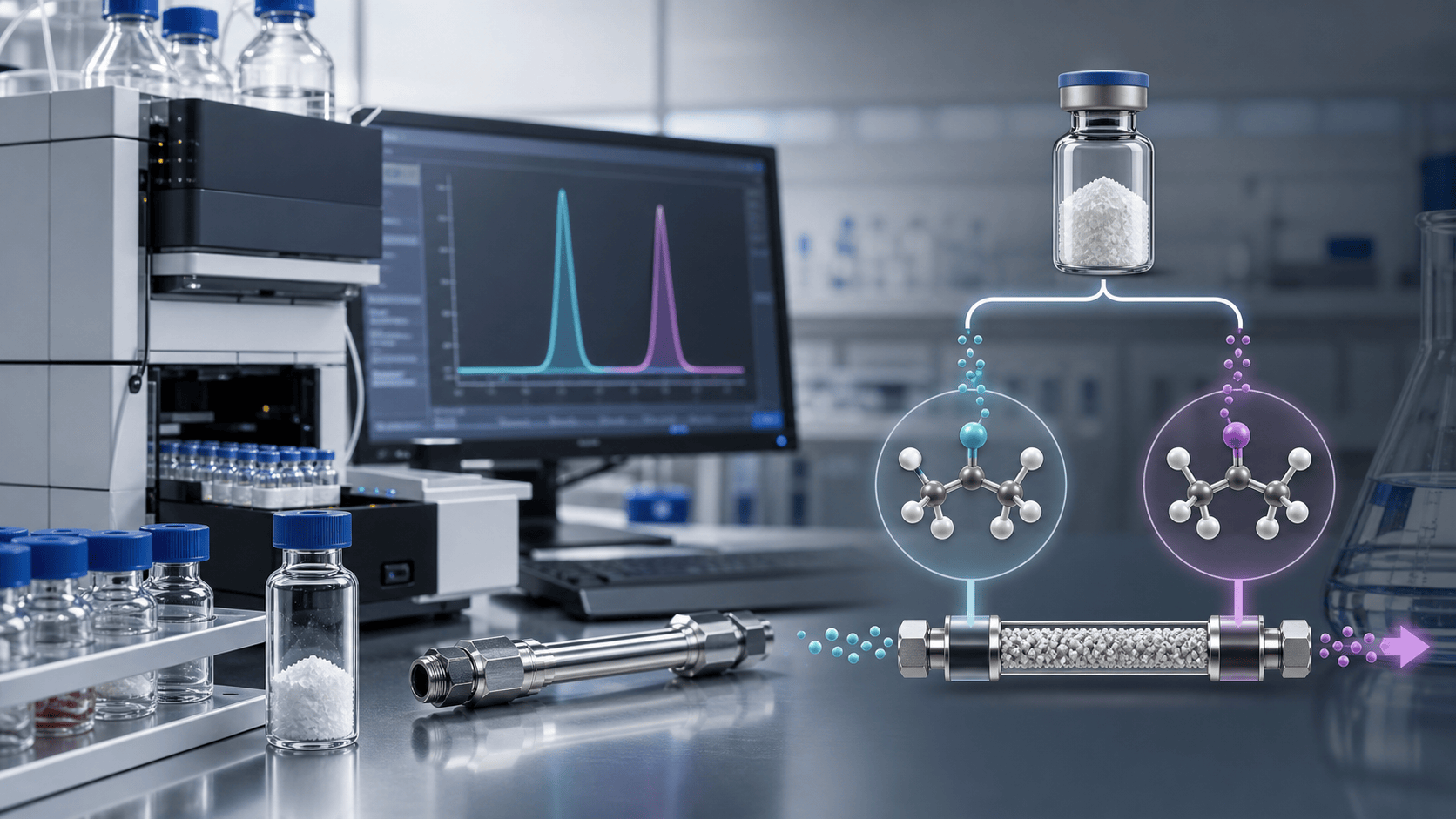
A chiral synthesis route is only as reliable as the analytical methods used to control it. For pharmaceutical development, chiral analysis is required to confirm identity, purity and stereochemical consistency.
Common analytical techniques include:
Among these, chiral HPLC and SFC are widely used because they can separate and quantify enantiomers directly. Analytical teams must validate method specificity, sensitivity, linearity, precision and robustness, especially when the undesired enantiomer is treated as a controlled impurity.
During discovery, chemists often need rapid access to both enantiomers to compare biological activity. At this stage, speed may matter more than route elegance. Chiral separation or short asymmetric routes are commonly used to support SAR studies.
As a program moves into development, the priorities change. The synthetic route must support reliable scale-up, impurity control, cost management and regulatory expectations. A route that works well for milligram synthesis may not be acceptable for kilogram manufacturing.
Key development questions include:
Good chiral process development connects chemistry, analytics, pharmacology and regulatory thinking from the beginning.
Chiral synthesis can be technically demanding. A reaction may show excellent selectivity at small scale but lose performance during scale-up. Solvent changes, temperature gradients, mixing, catalyst quality and impurity profiles can all affect stereochemical outcome.
Common challenges include:
Because of these risks, route scouting should include stress testing. Process chemists should evaluate not only the desired reaction, but also how stereochemical purity behaves during isolation, purification and stability studies.
For pharmaceutical and CDMO teams working with chiral molecules, several practices can reduce development risk.
First, define the stereochemical target early. This includes absolute configuration, acceptable stereoisomeric impurity limits and the analytical method used to confirm them.
Second, compare multiple route options. Asymmetric catalysis may be elegant, but resolution or biocatalysis may be faster, cheaper or more robust for a specific molecule.
Third, build chiral analytics into development from the start. Waiting until late-stage scale-up to develop a reliable chiral method can create avoidable delays.
Fourth, evaluate racemization risk. Some stereocenters are stable; others can epimerize under acidic, basic, thermal or oxidative conditions.
Finally, align chemistry and regulatory documentation. The manufacturing process, specifications, impurity strategy and stability protocol should all support stereochemical control.
Chiral synthesis is a core discipline in modern pharmaceutical chemistry. It allows researchers and manufacturers to prepare molecules with defined three-dimensional structure, improving control over biological activity, safety and product quality.
For researchers, chiral synthesis opens the door to clearer structure-activity relationships and better molecular design. For pharmaceutical manufacturers, it supports scalable production of stereochemically controlled drug substances and intermediates.
A successful chiral synthesis strategy is not only selective. It is practical, measurable, reproducible and aligned with the needs of drug development.
Chiral synthesis is the preparation of molecules with controlled three-dimensional stereochemistry, usually to produce one desired enantiomer or diastereomer preferentially.
Chiral molecules can interact differently with biological systems. One enantiomer may have stronger activity, different metabolism or a different safety profile, so stereochemical control is important in drug development.
Asymmetric synthesis is a major type of chiral synthesis. It specifically refers to reactions that preferentially form one stereoisomer from achiral or prochiral starting materials.
Enantiomeric purity is commonly measured by chiral HPLC, chiral GC, SFC, capillary electrophoresis, optical rotation or NMR-based methods.
The best method depends on the molecule and development stage. Asymmetric catalysis, chiral pool synthesis, chiral resolution and biocatalysis are all useful options.