
2026-06-22 Posted by TideChem view:297
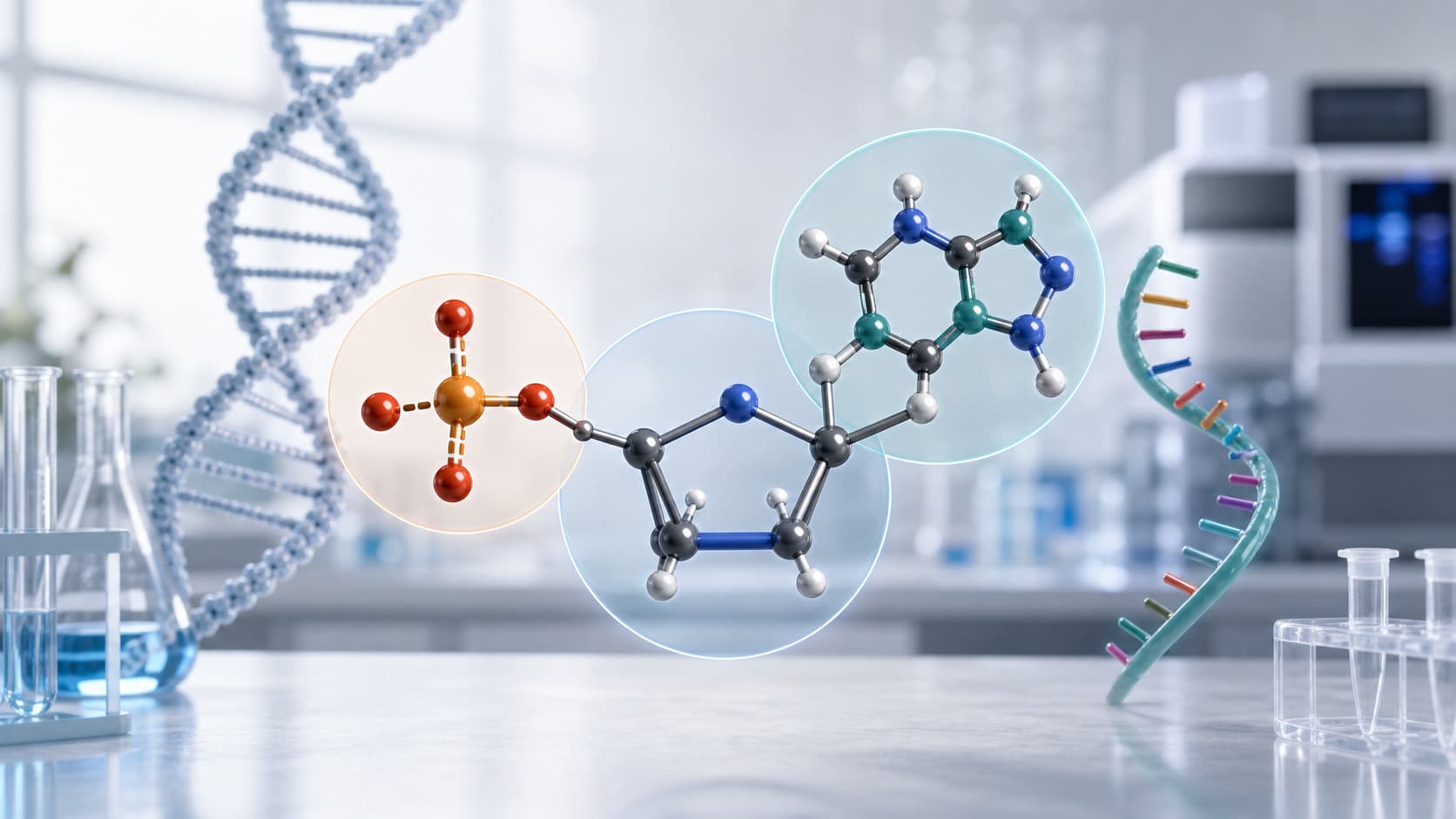
The monomer of nucleic acids is the nucleotide. Nucleotides are the repeating molecular units that build DNA and RNA, the two major types of nucleic acids found in biological systems.
A nucleotide has three core components: a phosphate group, a five-carbon sugar, and a nitrogenous base. When nucleotides join together through phosphodiester bonds, they form long nucleic acid polymers. In DNA, these polymers store genetic information. In RNA, they support gene expression, protein synthesis, regulation, catalysis, and many biotechnology applications.
For researchers and pharmaceutical professionals, this topic is more than a basic biology question. Nucleotide chemistry underlies PCR, sequencing, mRNA vaccines, antisense oligonucleotides, siRNA drugs, nucleoside analog antivirals, gene editing, synthetic biology, and nucleic acid quality control.
The simplest answer is:
Nucleotides are the monomers of nucleic acids.
DNA is built from deoxyribonucleotides.
RNA is built from ribonucleotides.
Each nucleotide contains:
In DNA, the sugar is 2′-deoxyribose. In RNA, the sugar is ribose. This small chemical difference has large biological consequences, especially for stability, structure, and enzymatic recognition.
A nucleotide is an organic molecule made of three linked parts.
| Component | Role |
| Phosphate group | Forms the sugar-phosphate backbone and gives nucleic acids negative charge |
| Pentose sugar | Provides the structural framework and 5′/3′ directionality |
| Nitrogenous base | Carries sequence information through base pairing |
The nitrogenous bases are divided into two groups:
DNA uses adenine, guanine, cytosine, and thymine.
RNA uses adenine, guanine, cytosine, and uracil.
This is one of the most common sources of confusion.
A nitrogenous base is only the base portion, such as adenine or cytosine.
A nucleoside contains a nitrogenous base plus a sugar, but no phosphate group.
A nucleotide contains a nitrogenous base, a sugar, and one or more phosphate groups.
| Term | Components | Example |
| Nitrogenous base | Base only | Adenine |
| Nucleoside | Base + sugar | Adenosine |
| Nucleotide | Base + sugar + phosphate | Adenosine monophosphate |
So, the monomer of nucleic acids is not just a base and not just a nucleoside. The correct answer is nucleotide.
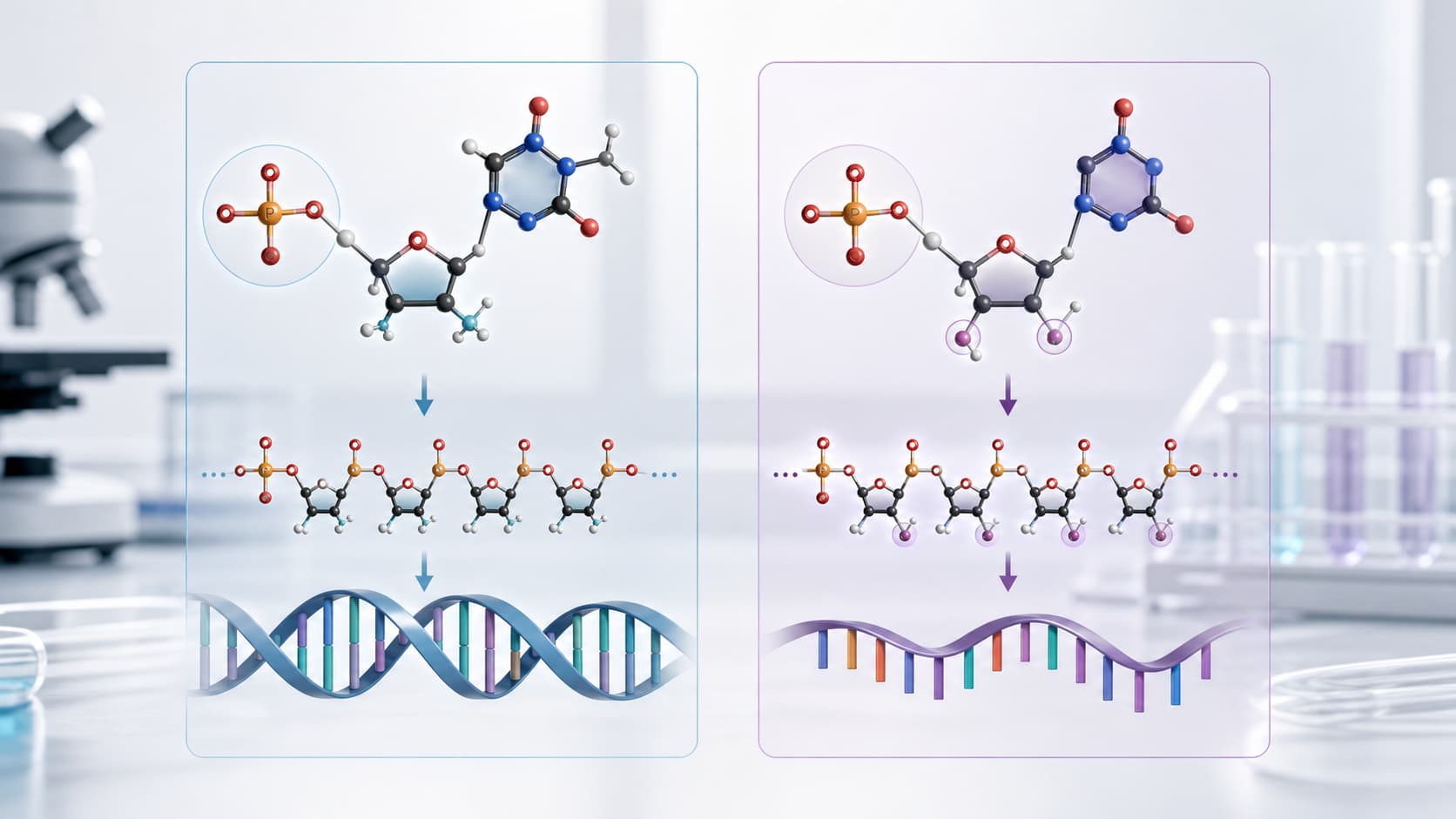
DNA and RNA are both nucleic acids, but their monomers are not identical.
| Feature | DNA | RNA |
| Monomer type | Deoxyribonucleotide | Ribonucleotide |
| Sugar | 2′-deoxyribose | Ribose |
| Bases | A, T, G, C | A, U, G, C |
| Typical structure | Double-stranded | Usually single-stranded |
| Stability | More chemically stable | Less stable due to 2′-OH group |
| Main role | Long-term genetic storage | Gene expression and regulation |
The key chemical difference is the 2′ position on the sugar. RNA has a hydroxyl group at this position, while DNA has hydrogen. This makes RNA more reactive and easier to hydrolyze than DNA.
Nucleotides join together through 3′-5′ phosphodiester bonds. These bonds connect the phosphate group of one nucleotide to the sugar of the next nucleotide.
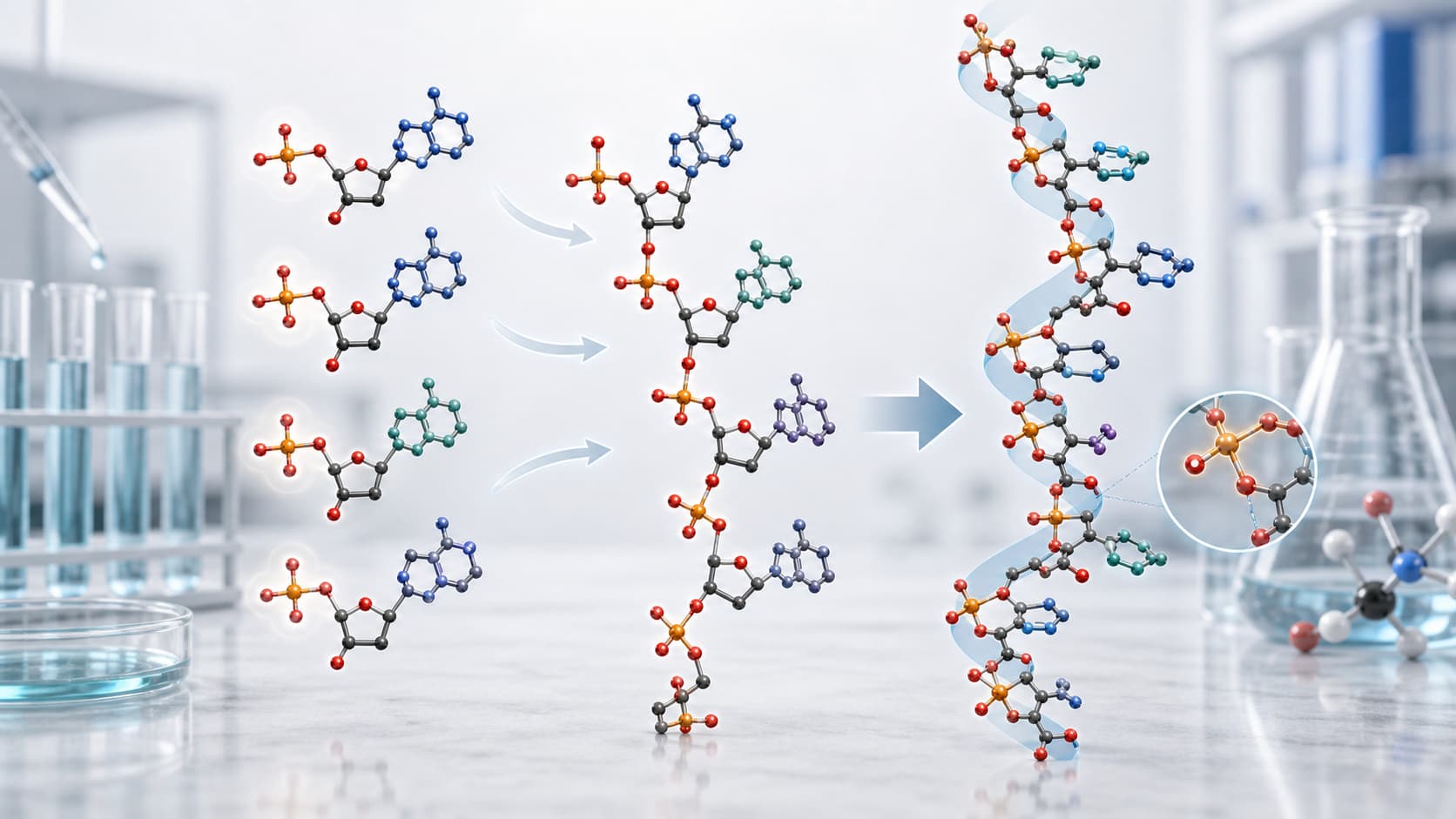
This polymerization creates a sugar-phosphate backbone, with nitrogenous bases extending from the backbone. The sequence of bases stores biological information.
Nucleic acid chains have directionality:
DNA and RNA polymerases synthesize nucleic acids in the 5′ to 3′ direction by adding new nucleotides to the 3′ end of the growing chain.
In a polymer, the repeating units are often referred to as nucleotide residues. During biosynthesis, however, cells usually use nucleoside triphosphates as substrates.
For DNA synthesis, the substrates are:
For RNA synthesis, the substrates are:
During polymerization, the incoming nucleoside triphosphate loses pyrophosphate, and the remaining nucleotide becomes part of the nucleic acid chain.
This distinction matters in enzymology, sequencing chemistry, polymerase assays, and nucleic acid drug manufacturing.
The nucleotide sequence determines the information content of DNA and RNA.
In DNA:
In RNA:
These pairing rules allow DNA replication, transcription, reverse transcription, primer design, hybridization assays, and nucleic acid therapeutics to work with high molecular specificity.
Nucleotides are not only structural monomers of nucleic acids. They also play major roles in metabolism and signaling.
Important nucleotide-related molecules include:
This broad biology explains why nucleotide metabolism is deeply connected to cancer biology, antiviral therapy, immunology, mitochondrial disease, and metabolic regulation.
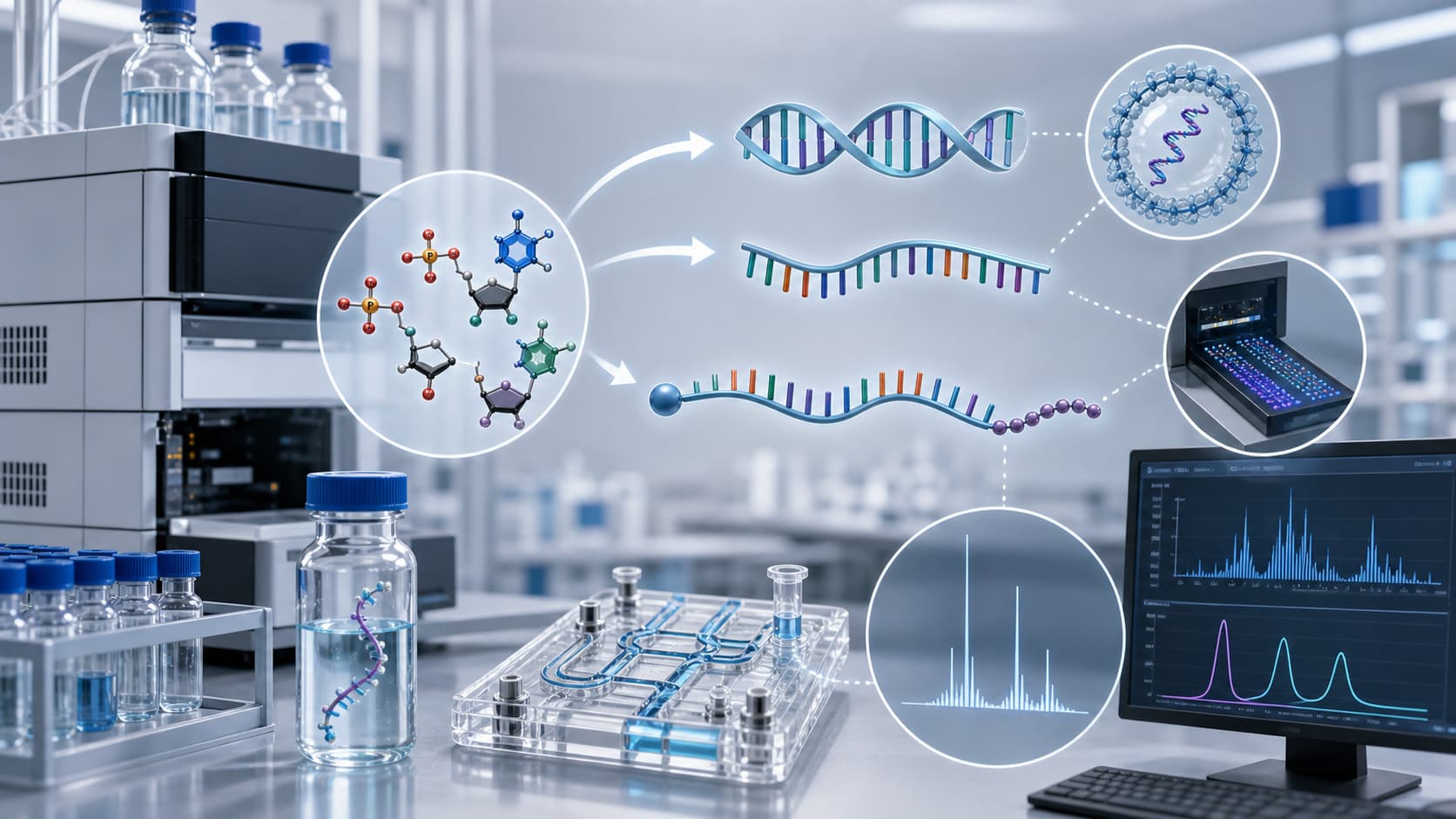
For the pharmaceutical industry, nucleotides are foundational to several therapeutic and analytical platforms.
Antisense oligonucleotides, siRNA, aptamers, and splice-modulating drugs are built from nucleotide-like units. Many include chemical modifications to improve stability, target binding, tissue distribution, and nuclease resistance.
Common modification strategies include:
mRNA products are built from ribonucleotide units. Manufacturing requires control over sequence, capping, poly(A) tail, impurities, double-stranded RNA content, residual enzymes, and delivery system compatibility.
Modified nucleotides may be used to influence translation, stability, and innate immune recognition.
Many antiviral and anticancer drugs are nucleoside or nucleotide analogs. These molecules mimic natural building blocks but interfere with viral replication, DNA synthesis, RNA synthesis, or nucleotide metabolism.
This class is especially important in antiviral drug discovery, oncology, and polymerase-targeted therapy.
Sequencing, PCR, qPCR, RT-PCR, digital PCR, and hybridization assays all rely on nucleotide recognition and base pairing. Primer design, probe specificity, melting temperature, mismatch tolerance, and polymerase fidelity all depend on nucleotide chemistry.
Nucleic acid products require analytical methods that can detect sequence errors, truncation products, depurination, oxidation, modified nucleotides, residual solvents, salts, and process-related impurities.
Common methods include:
Misconception 1: The monomer of nucleic acids is a nitrogenous base.
A base is only one part of a nucleotide. It is not the complete monomer.
Misconception 2: Nucleoside and nucleotide mean the same thing.
A nucleoside lacks phosphate. A nucleotide contains phosphate.
Misconception 3: DNA and RNA use exactly the same monomers.
DNA uses deoxyribonucleotides. RNA uses ribonucleotides.
Misconception 4: Nucleotides only store genetic information.
They also function in energy transfer, signaling, enzyme cofactors, and therapeutic platforms.
The monomer of nucleic acids is the nucleotide. Each nucleotide contains a phosphate group, a pentose sugar, and a nitrogenous base. DNA is made from deoxyribonucleotides, while RNA is made from ribonucleotides.
Nucleotides become nucleic acid polymers through 3′-5′ phosphodiester bonds, forming the sugar-phosphate backbone that supports genetic information storage and transfer.
For researchers and pharmaceutical professionals, understanding nucleotide structure is essential for molecular biology, drug discovery, oligonucleotide therapeutics, mRNA technologies, sequencing, diagnostics, and nucleic acid quality control.
The monomer of nucleic acids is the nucleotide.
A nucleotide contains a phosphate group, a five-carbon sugar, and a nitrogenous base.
No. A nucleoside contains a sugar and a base, but it lacks a phosphate group. The complete monomer is a nucleotide.
The monomers of DNA are deoxyribonucleotides.
The monomers of RNA are ribonucleotides.
Nucleotides join through 3′-5′ phosphodiester bonds to form a sugar-phosphate backbone.
DNA nucleotides contain deoxyribose and use thymine. RNA nucleotides contain ribose and use uracil.
Nucleotides are central to oligonucleotide drugs, mRNA products, nucleoside analogs, sequencing, diagnostics, and nucleic acid analytical development.
References:
NCBI Bookshelf: The Human Genome, Genomes 2nd Edition